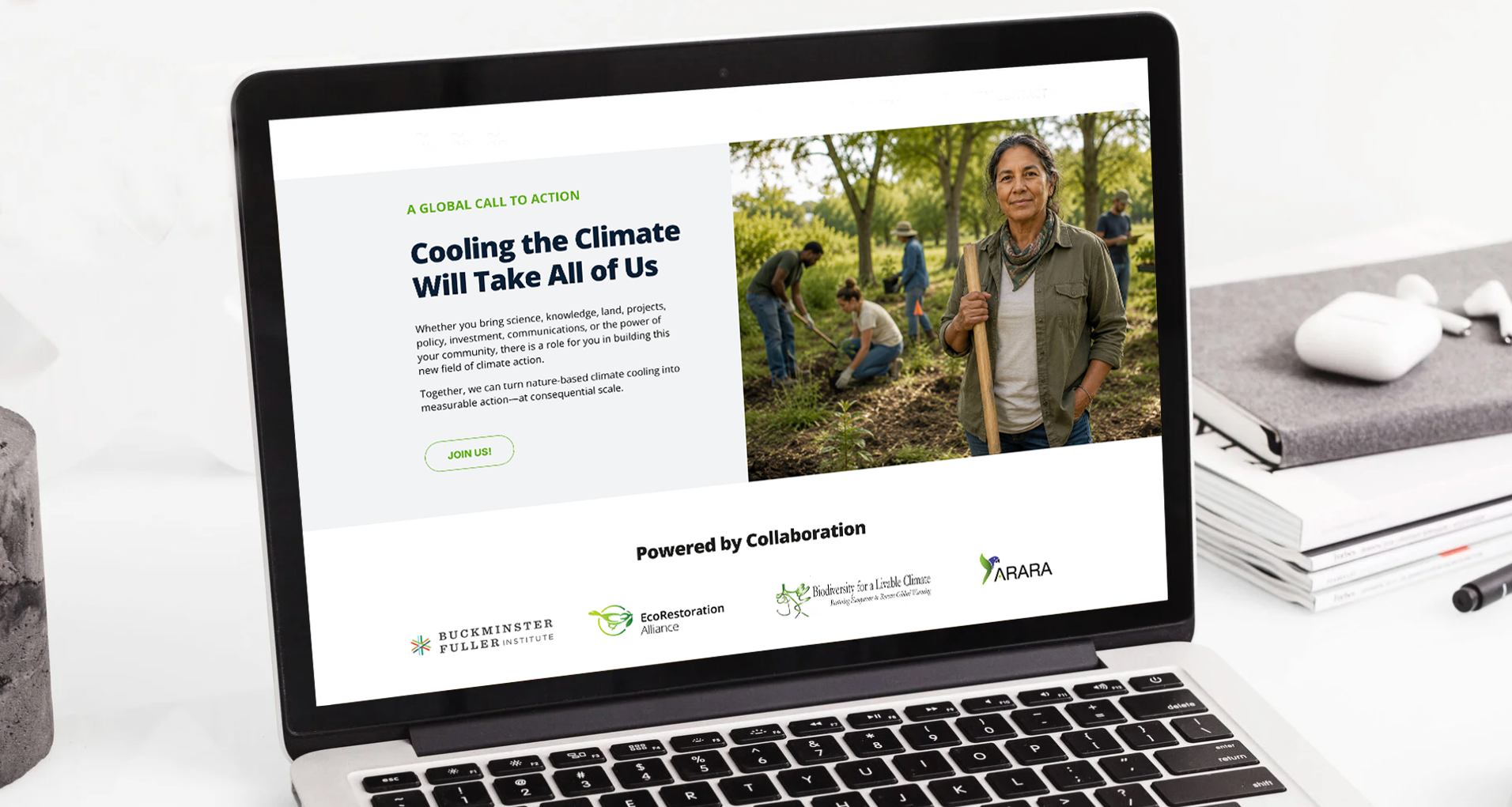
The Climate Cooling Initiative Just Launched
Three of the environmental organizations I've been working with through Brand Intelligence—the Buckminster Fuller Institute, the EcoRestoration Alliance, and ARARA—have come together to launch an ambitious new initiative.
The Climate Cooling Initiative, launched during Climate Week NYC 2026, is focused on an aspect of climate change that has received too little attention: the huge role that nature itself plays in keeping the planet cool.
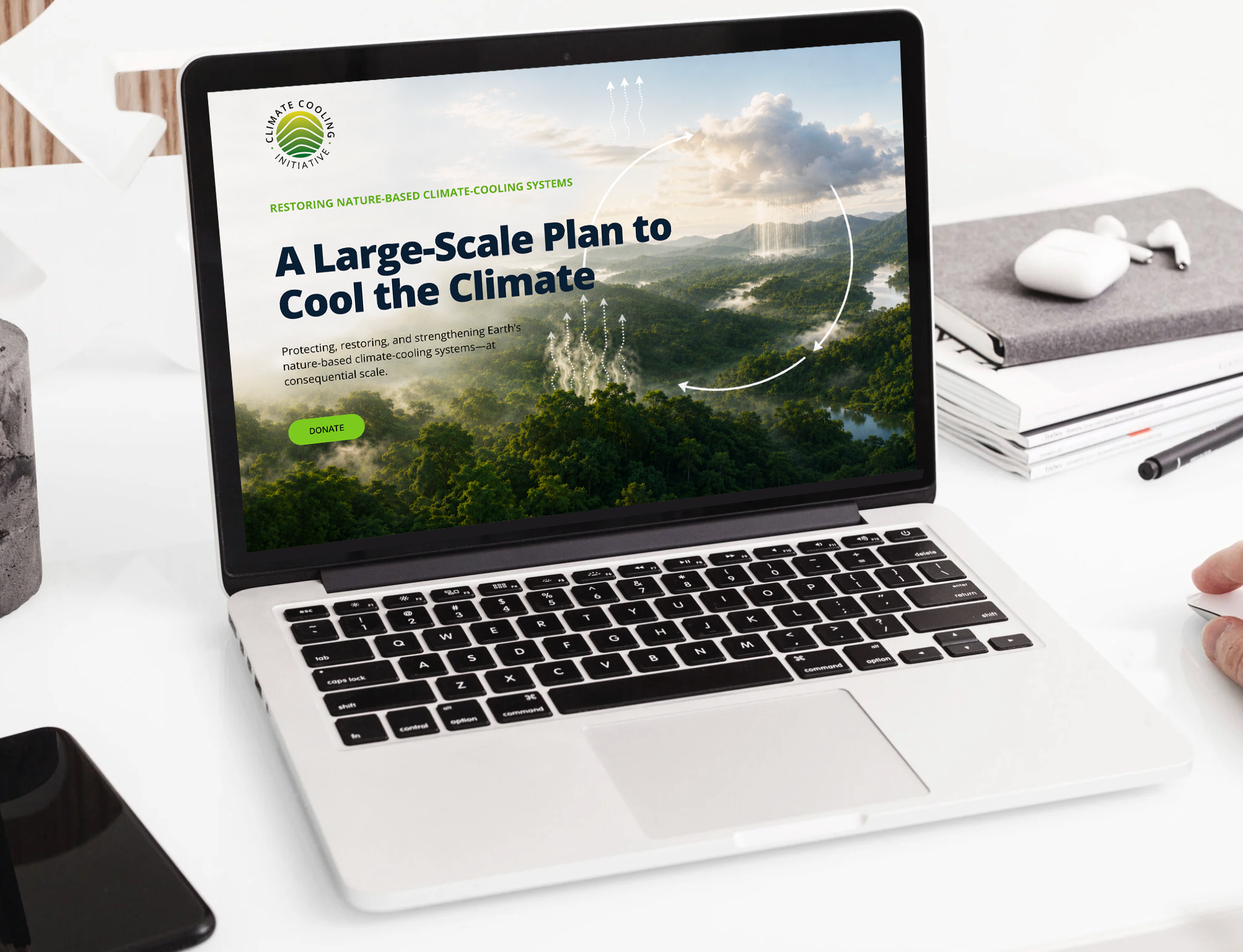
Reducing greenhouse-gas emissions is essential to addressing climate change. But CO₂ can remain in the atmosphere for a long time, and even when emissions reach net zero, temperatures aren't expected to drop quickly. Focusing just on reducing emissions and removing carbon overlooks another powerful tool we can use: strengthening the natural systems that cool the planet.
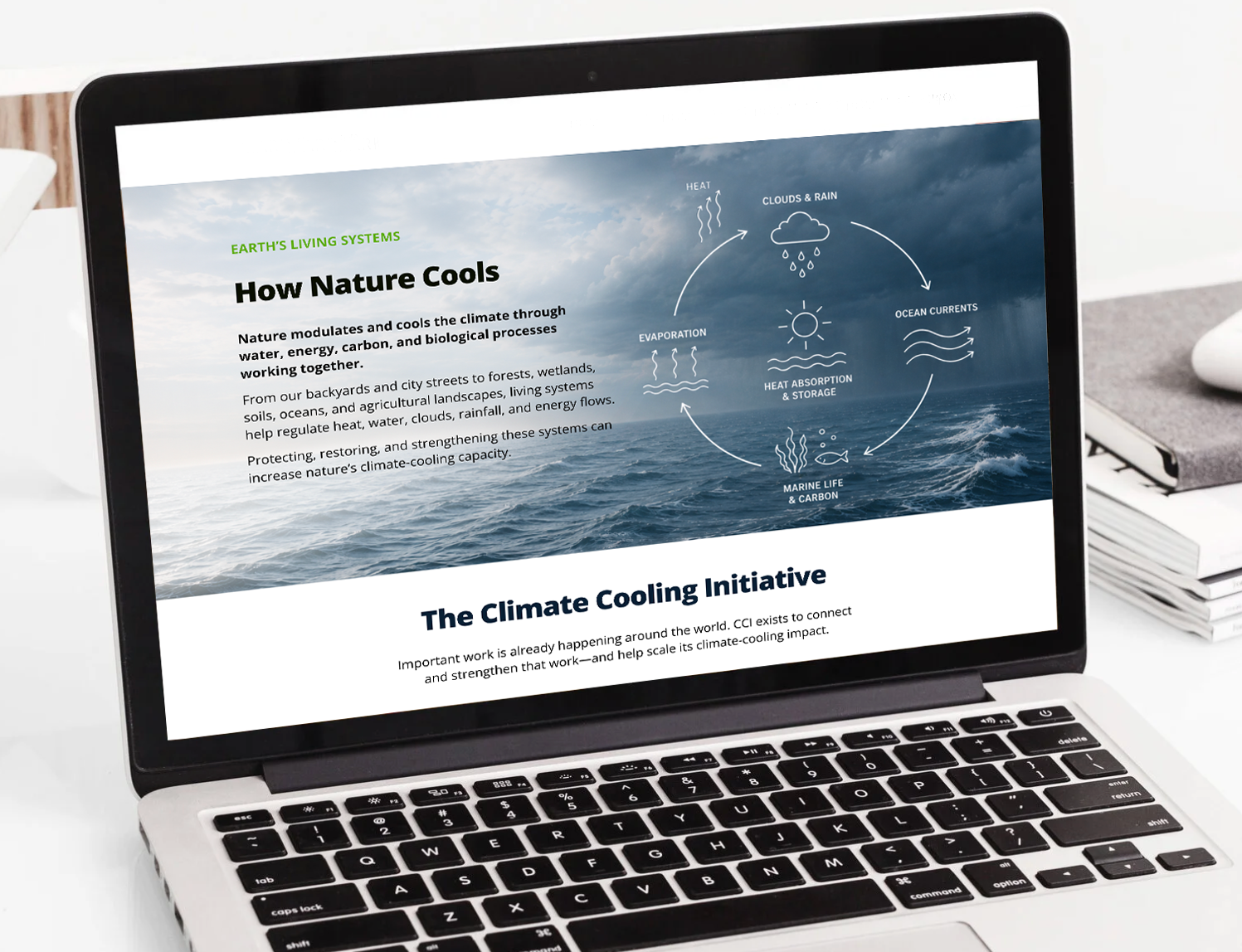
Every day, nature cools the planet—directly, and quickly. Forests and other vegetation draw water from the soil and release it through their leaves; the evaporation of that water absorbs heat, much as perspiration cools our bodies. Recent research found that increased vegetation across the world’s drylands produced an estimated land-surface cooling effect of about 0.44°C between 2001 and 2021, almost entirely through evapotranspiration.
The Amazon rainforest offers a clear example of how powerful these natural systems can be. Moisture from the Atlantic falls as rain over the forest and is pumped back into the atmosphere by trees. That moisture travels onward and falls again, helping sustain the vast atmospheric flows known as “flying rivers” that carry water across much of South America.
When the Amazon or other forests are logged, it isn't simply a matter of losing trees and carbon storage—it's weakening this continental-scale water pump. Less forest means less water returned to the atmosphere. Less rainfall results in more heat and drought, and greater vulnerability to further forest loss. Scientists warn that large portions of the Amazon could approach critical tipping points in the coming decades, shifting from rainforest toward drier, savannah-like ecosystems. The consequences for rainfall and temperatures across South America would be profound, with implications for the global climate.
But the good news is that this process can run in the other direction as well: protecting and restoring forests strengthens water cycling, rainfall, and the cooling those processes provide. The effects of evapotranspiration are visible around the world. In the U.S., increasingly productive Midwest croplands have helped lower the hottest summer temperatures by as much as 1°C as plants move more water from the soil into the atmosphere. In Medellín, Colombia, 30 green corridors planted along streets and waterways have helped lower temperatures by about 2°C. And across Africa, researchers estimate that large-scale land restoration could lower local surface temperatures by about 0.2°C on average, with some existing restoration projects showing cooling of nearly 2°C.
CCI's premise is straightforward: alongside the crucial work of reducing greenhouse-gas emissions, we must do more to protect, restore, and strengthen the natural systems that cool the Earth. Stop deforestation in the Amazon. Plant more trees in cities. Restore soils and watersheds so they hold more water and support more vegetation. Explore ways to preserve the cooling effects of clouds over the oceans.
The goal is to bring together science, ecological restoration, finance, and measurement—to understand where these approaches can have the greatest effect, demonstrate that they work, and ultimately make climate cooling work at a global scale.
Alongside my Brand Intelligence colleague Mary Olson, I've been helping articulate CCI's vision and give it an identity, including developing its messaging and writing and designing the new CCI website. It's been an honor to work with the CCI team, and a thrill to launch the new site during Climate Week NYC and help bring this new approach to climate change into the world.